The debate about sustainable IT has come of age. It is no longer about image, but about control. Those in positions of responsibility in medium-sized companies in Germany, Austria, and Switzerland are now making decisions about stability, costs, and the credibility of their own ESG goals. Technology is not the starting point, but rather the amplifier. Only when goals, responsibilities, and decision-making processes are clear is it worthwhile to fully leverage the cloud.
Leadership before technology
In many discussions with management teams, we see the same pattern. Scaling takes place before it is clear what IT is supposed to achieve. This results in costs and complexity without any measurable impact. The better approach starts with clear priorities. Which decisions should be made faster and more securely? Where can CO₂ emissions actually be reduced in the value chain? Which risks are acceptable? Once these questions have been answered, the cloud becomes an infrastructure for reliable decisions rather than the next cost center.
Azure as a building block for measurable impact
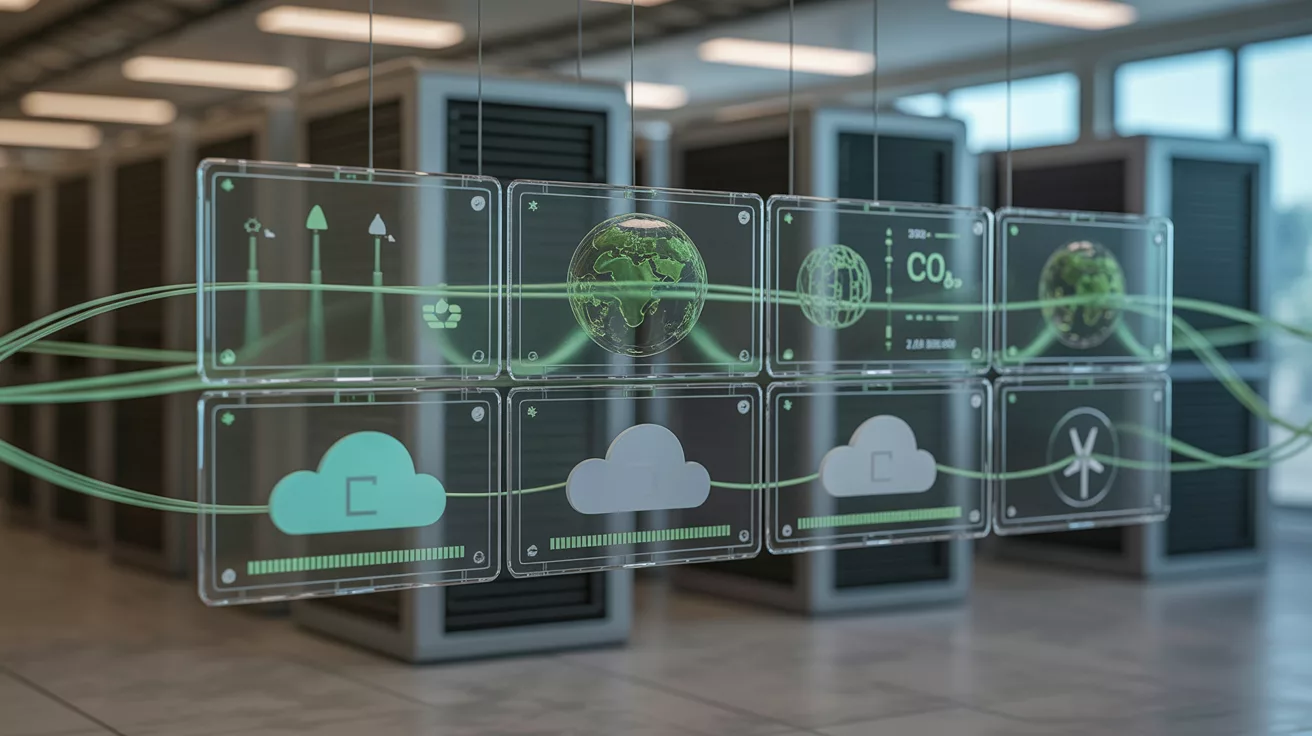
Microsoft Azure provides a robust foundation for this. Data centers and platform services can be scaled as needed, hardware is replaced by services, and energy consumption per workload can be reduced in a targeted manner. Transparency about your own climate impact in the cloud is crucial. This is exactly where Azure tools come in: The Emissions Impact Dashboard provides insight into the greenhouse gas emissions of the Azure services used and highlights potential savings. This gives management teams data that can be used for financial and sustainability management.
Transparency that supports decision-making
Beyond the cloud, Microsoft Sustainability Manager supports the collection, reporting, and reduction of environmental metrics. It bundles data, automates processes, and expands the view to include water, waste, and, increasingly, social and governance metrics. The result is less manual work and higher-quality decisions in terms of audit security and reporting cycles.
Energy supply and the reality of the boom
Microsoft’s goal is to cover its entire electricity consumption with renewable energy purchases by 2025 and to match its electricity consumption around the clock with CO₂-free electricity from 2030 onwards. This is ambitious and relevant for corporate customers because it reduces the indirect emissions burden. At the same time, Microsoft is building additional wind and solar capacity through partnerships, which are expected to come online between 2026 and 2030.
At the same time, the reality remains clear. The AI and cloud boom is increasing the energy and material requirements for new data centers. In recent years, Microsoft’s total emissions have risen, primarily through its supply chain. For decision-makers, this means seizing opportunities, but regularly checking assumptions against data.
The simplest lever: reducing CO₂ in IT operations
This is exactly where dategro comes in. Our work does not start with tools, but with leadership and structure. Then we leverage the simplest lever: reducing CO₂ where IT operations and costs converge directly. To do this, we combine the transparency of Azure with a data foundation that goes beyond the cloud. With Net0, emissions data from operations and the supply chain can be consolidated, automated, and translated into prioritized measures. This accelerates decarbonization, reduces manual effort, and highlights savings, including efficiency potential. Learn more here: https://net0.com.
A pragmatic roadmap for small and medium-sized businesses
1. Sharpen your goals. Which decisions should be made more reliable through cloud and data? Which emissions and cost targets apply quarterly and by the end of the year?
2. Clarify responsibilities. Who is responsible for managing costs, risk, and CO₂ in IT? How are conflicting goals resolved?
3. Create basic transparency. Activate the Emissions Impact Dashboard for Azure and integrate KPIs into management reporting. Identify initial hotspots.
4. Standardize data. Connect Sustainability Manager and Net0 to relevant sources. Automate reporting and secure audit trails.
5. Focus investments. Prioritize measures according to impact, feasibility, and risk. First stabilize processes, then automate them. Technology scales what already works.
How you can recognize success
You will see falling energy costs per workload. You will reduce CapEx because less of your own hardware is tied up. You will be able to report reliably because data flows are automated and verifiable. And you will gain freedom in your strategy because scaling becomes plannable and the climate impact of your IT is traceable.
Conclusion
Sustainable IT is not a fair-weather project. It is an ongoing management task that rewards clarity. With Azure as the technical foundation, tools for transparency, and clean data management beyond the cloud, sustainability can be translated into real resilience and return on investment. When structures and responsibilities are in place, technology scales the right things. That’s exactly what we’re working on with dategro.

Ready to Transform on Your Terms?
If you want to structure the first step, we would be happy to discuss your starting position and the fastest levers.
Dategro partners with mid-sized industrial companies to transform disconnected commercial data into unified performance dashboards—without replacing core systems or creating IT headaches.